
B L O G
XINDA MOTOR
  1. Home
  2. Knowhow

Why does the motor shaft go out of alignment?

Date:2026-08-15   Author:Shandong Xinda Motor Co., Ltd.
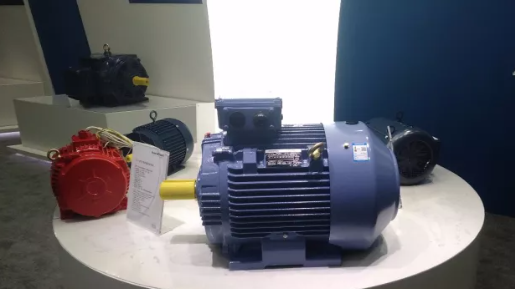
Axial runout is always present to some extent during motor operation and cannot be completely avoided. When the runout reaches a certain level, it can cause serious damage to the supporting equipment or the motor itself, leading to numerous motor failures. MS. has analyzed some concentrated cases of motor axial runout problems, finding that most motors experiencing axial runout have some design flaws , reflecting the need to anticipate axial runout or other axial runout problems in advance during the design phase to minimize their occurrence.


       Generally, motors are axially fixed at one end and floating at the other. Smaller motors rely solely on the interference fit of the bearings for positioning, especially those using sealed bearings without bearing covers. As a result, the following situations often occur: the fixed end is not completely fixed, causing unexpected axial movement in the equipment; or the fit between the shaft and bearing of a small motor is too loose, causing the bearing to move axially under vibration.

Analysis of the causes of axial movement

● When the clearance between the shaft and the rotor is too large, the relative movement between the rotor and the shaft will cause the stator and rotor cores to be misaligned, which will aggravate the axial movement of the rotor and shaft relative to the stator.
● Wave spring washers are installed at both ends of the motor bearing. If they are not installed or the quality of the washers is not up to standard, this problem will also occur.
● The axial force generated by the fan as the motor rotates, i.e., the axial force of the wind on the fan blades. This effect is smaller for low-speed motors, but more pronounced for motors with relatively high speeds and relatively loose radial fits.

● When the stator and rotor are not axially aligned, axial forces are generated due to changes in the electromagnetic field. This problem exists in every motor because it is currently difficult for any motor manufacturer to achieve perfect alignment. During the motor manufacturing process, defects such as horseshoe-shaped stators and rotors, spring-loaded joints, cast aluminum rotor bottoms, and radial ventilation channel warping can all lead to varying degrees of misalignment.
● Misalignment of the magnetic center line of a sliding bearing motor can cause shaft movement.
● The large clearance between the bearing and the shaft, or between the bearing and the end cover bearing housing, can cause axial movement. This situation may also result in the bearing running out of its bearing housing.


For the problem of axial movement, large-size motors can solve the problem by using a bearing cover to position one end. A wave-shaped washer can be added between the bearing end face and the end cover in the axial direction for adjustment. For motors without a bearing inner cover, a retaining ring groove can be added to the bearing housing of the end cover and the bearing retaining ring can be installed during assembly.
 For horizontally mounted motors, the ideal solution to this problem is to ensure the alignment of the stator and rotor. However, for vertically mounted motors, the influence of the rotor's weight on axial movement must also be considered. Many motor manufacturers do not pay enough attention to the machining dimensions of the bearing caps, leading to frequent occurrences of this type of problem. Better motor manufacturers, on the other hand, focus on controlling the tolerances of components, thus gradually highlighting the differences in motor quality.