




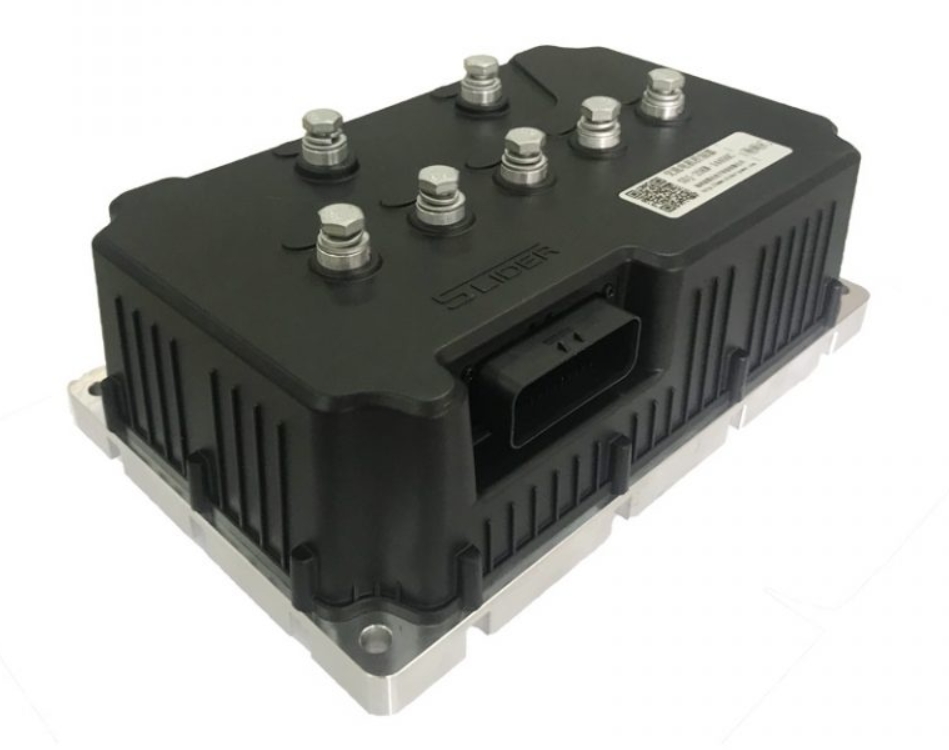


Struggling with motor selection calculations?
Choosing a motor that's too small won't be able to drive the machine, while choosing one that's too large wastes electricity and costs money. 90% of people make this mistake because they don't know how to calculate or don't calculate accurately. This article is pure, practical advice—no fluff, all formulas, and case studies. Mechanical designers, equipment maintenance engineers, and automation engineers, after reading this, you can start selecting the right model right away!
I. Motor Selection: First, Understand These 4 Core Parameters
Choosing a motor isn't about guessing based on power rating; you must first accurately calculate four key values:
1. Load torque T (N·m)
2. Rotational speed n (r/min)
3. Power P (kW)
4. Safety factor K
All calculations revolve around these four values.
II. Motor Selection Calculation Formula (Direct Application)
1. Power calculation formula (most commonly used)
P = T × n ÷ 9550 ÷ η
- P: Motor power (kW)
- T: Load torque (N·m)
- n: Motor speed (r/min)
- η: Transmission efficiency (gear ≈ 0.9, belt ≈ 0.85, chain ≈ 0.9)
2. Torque Calculation Formula
T = 9550 × P ÷ n
3. Final power selection
P<sub>select</sub> = P<sub>calculated</sub> × safety factor K
Recommended safety level:
- Light, stable load: K=1.1~1.2
- Moderate impact load: K=1.2~1.5
- Heavy load/frequent starts: K=1.5~2.0
III. General Selection Steps (Follow these steps in order to avoid mistakes)
1. Determine the load type: conveyor belt, winch, fan, water pump, screw conveyor…
2. Calculate the operating speed
3. Calculate the load torque
4. Calculate the required motor power.
5. Multiply by a safety factor to determine the rated power.
6. Verify voltage, number of poles, installation method, and protection level.
IV. Practical Case Study: Conveyor Belt Motor Selection (Most Common)
Let's go straight to the real working conditions and calculate it for you step by step!
[Operating Conditions]
- Conveyor belt conveyor weight: G=500kg
- Conveyor belt speed: v = 0.5 m/s
- Drive roller diameter: D=200mm=0.2m
- Coefficient of friction: μ=0.03
- Transmission efficiency: η=0.9
- Safety factor: K=1.2
Step 1: Calculate the traction force F
F = G × g × μ = 500 × 9.8 × 0.03 = 147 N
Step 2: Calculate the drum torque T
T = F × D/2 = 147 × 0.1 = 14.7 N·m
Step 3: Calculate the drum speed n
n = 60×v ÷ (π×D) = 60×0.5 ÷ (3.14×0.2) ≈ 47.8 r/min
Step 4: Calculate motor power
P = T×n ÷ 9550 ÷ η
= 14.7 × 47.8 ÷ 9550 ÷ 0.9
≈ 0.081 kW
Step 5: Multiply by a safety factor to determine the final power.
P<sub>select</sub> = 0.081 × 1.2 ≈ 0.097 kW
Conclusion: A 0.12kW or 0.18kW motor is sufficient for the application.
V. Quick Selection Guide for Different Equipment (Save for future reference)
1. Fan/Pump: P ∝ Flow rate × Head, power is proportional to the cube of speed.
2. Screw conveyor: High torque, safety factor is 1.5~2.0.
3. Lifting/hoisting equipment: Static torque + dynamic torque must be calculated, with a safety factor ≥ 1.5.
4. CNC machine tools/servo systems: Calculated based on both acceleration torque and continuous torque.
VI. Tips to Avoid Pitfalls (Very Important)
1. Don't just look at the power output; if the torque isn't sufficient, even a high-capacity motor will stall.
2. For low-speed, high-load applications, a speed reducer should be prioritized.
3. Frequent forward and reverse rotations and impact loads necessitate a higher safety factor.
4. In humid and dusty environments, select an IP54 or higher protection rating.
Summarize
Motor selection = Calculated torque + Calculated power + Multiplied by safety factor
No problem if you can't remember the formulas, just bookmark this article and apply it directly when needed!
 XINDA
XINDA