


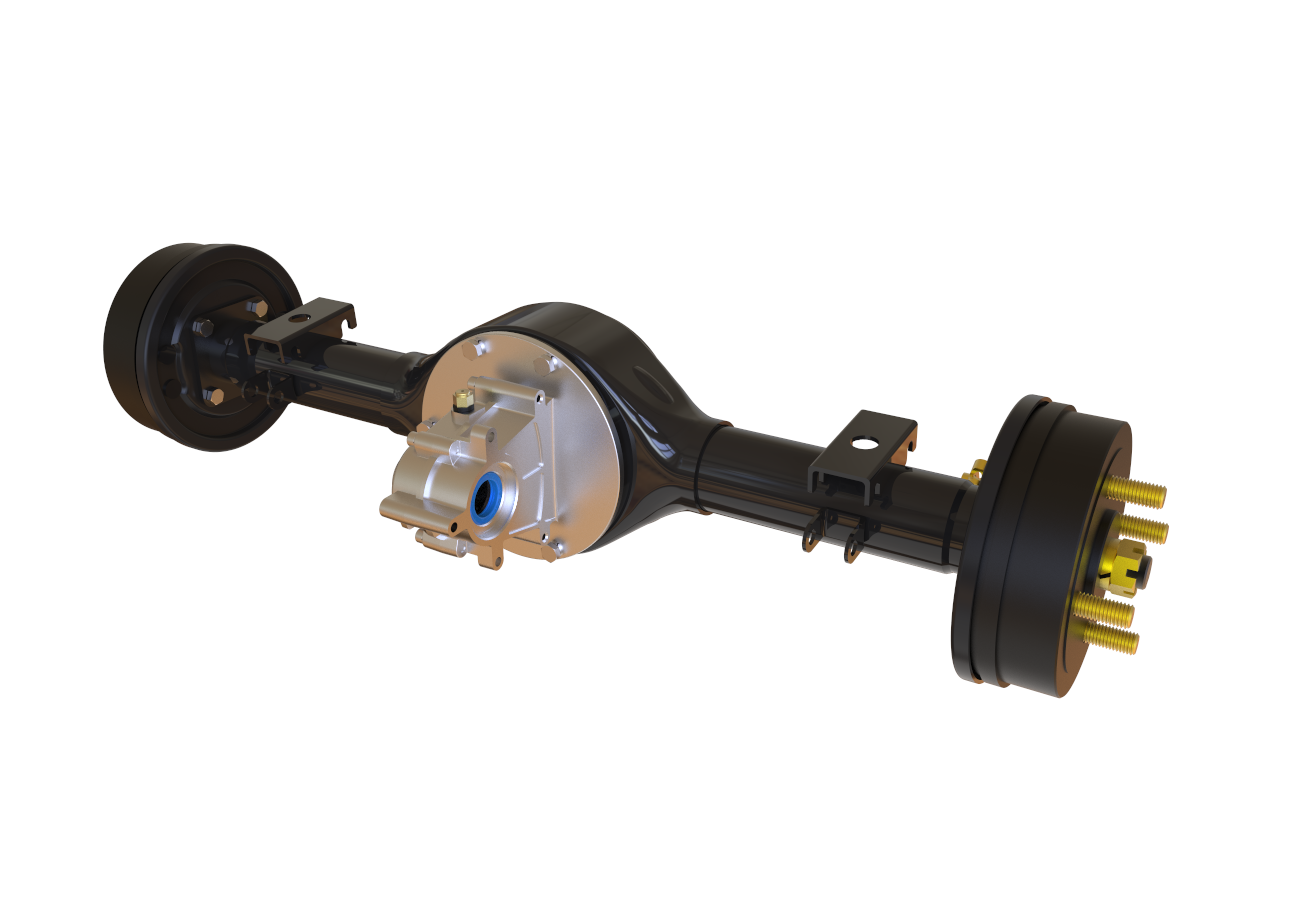


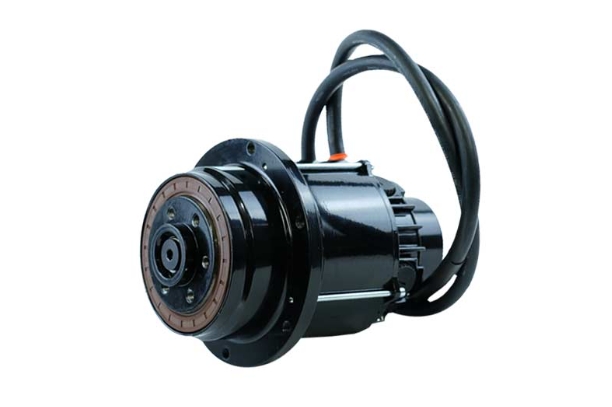
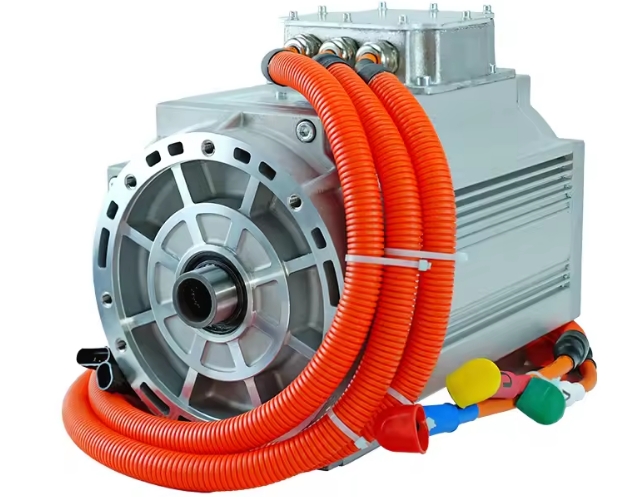
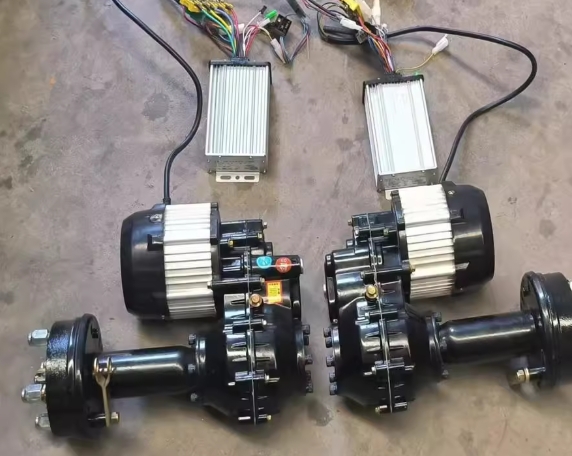


Geared motors vs. regular motors: what exactly is being "reduced"?
Have you ever encountered this kind of confusion in your daily work:
-
The equipment needs greater torque, but the motor size is limited and cannot be increased?
-
Why does a regular motor suddenly drop in speed or even stall and burn out when a load is applied?
-
How to balance the complex relationship between speed, torque and efficiency?
In fact, these problems can often be solved by selecting the right geared motor. So, what exactly does a geared motor "remove"? Today, we'll explain it thoroughly.
I. Gear motors "reduce" speed, but "increase" speed, which is the core function.
Simply put, a geared motor is a combination of a regular motor and a speed reducer . Its core function is to reduce the output speed while increasing the output torque through a gearbox (speed reducer).
Key formula:
Torque output increase factor ≈ Reduction ratio For example, with a reduction ratio of 10:1, the output torque is theoretically increased by 10 times (approximately 90% after considering mechanical efficiency).
II. Geared Motors vs. Regular Motors: Three Core Differences
|
|
|
|
|---|---|---|
| Output speed |
|
|
| Output torque |
|
|
| Load capacity |
|
|
| Applicable Scenarios |
|
|
III. Four Major Advantages of Gear Motors After "Reduction"
-
Boosting torque is like using a lever to move a heavy object, achieving high torque output with a small-power motor.
-
After deceleration by inertial control , the impact of load inertia on the motor is greatly reduced, and start-stop control is more precise.
-
Space optimization eliminates the need to select ultra-high-power motors to increase torque, saving equipment space.
-
Using a small-power motor with a speed reducer is often more economical than directly selecting a large-power motor.
IV. How to Choose the Right Model? Remember These Four Points
-
Determine the required torque (considering starting torque and peak torque).
-
Calculate the required rotational speed (based on equipment process requirements).
-
Match the reduction ratio (formula: reduction ratio = input speed / output speed)
-
Consider the installation method and size (such as different structures like planetary gears and worm gears).
V. Commitment of Xinda Technology
At Xinda Technology, we deeply understand that precise matching is more important than simply selling products. All our miniature geared motors are designed based on the above engineering principles and pass:
-
Rigorous torque testing
-
Lifespan assessment
-
Noise and temperature rise control
If you have any questions about product selection or application, we offer free technical consultation , and our engineers are happy to be your professional advisors.
With meticulous craftsmanship at its core, driving the future – Xinda Technology is dedicated to providing you with more stable and efficient micro-drive solutions!
 XINDA
XINDA