


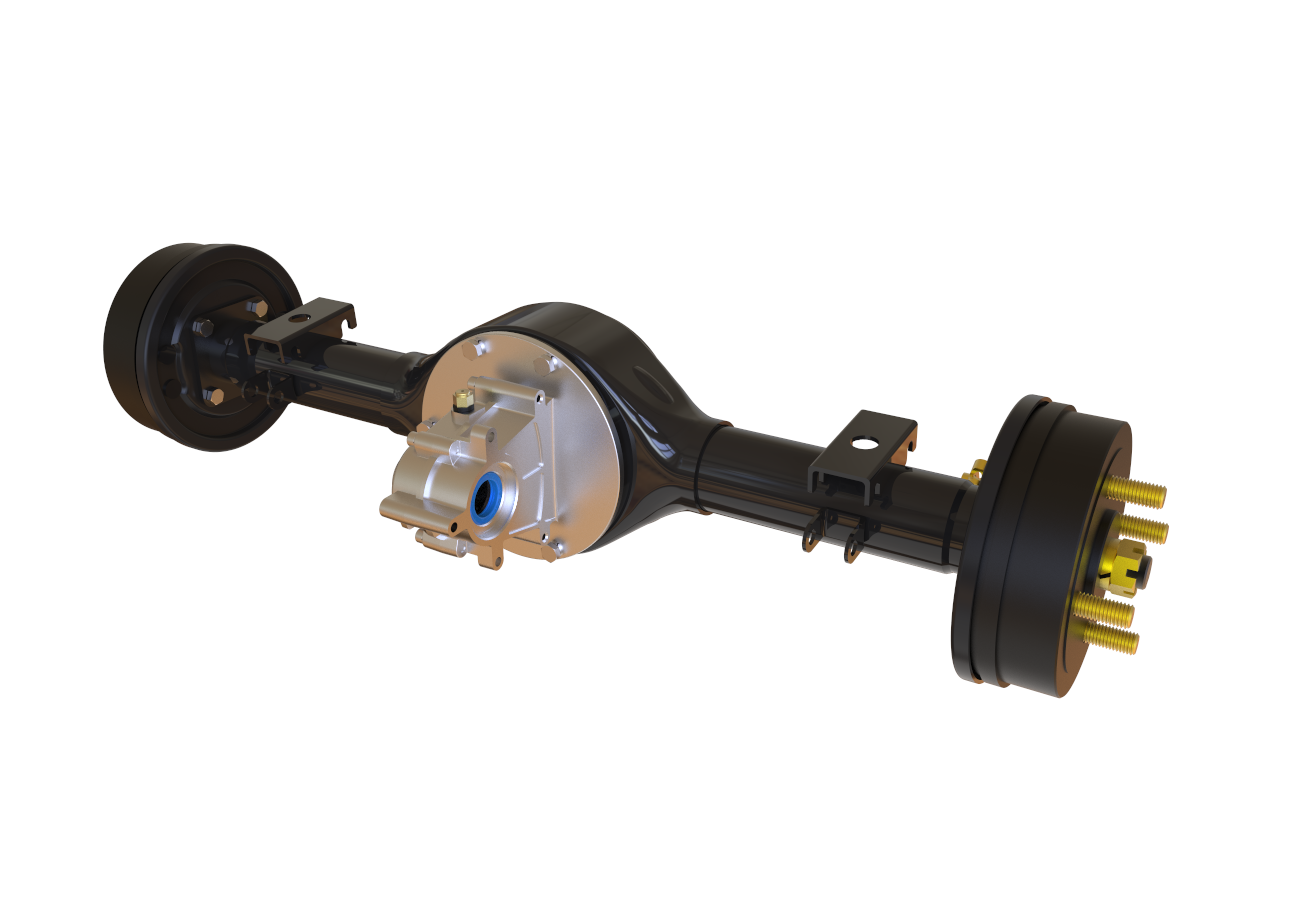


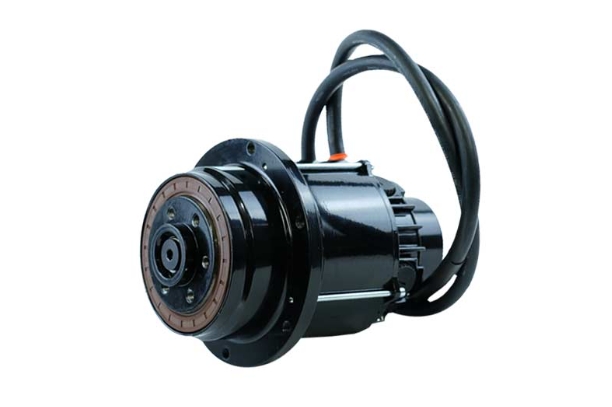
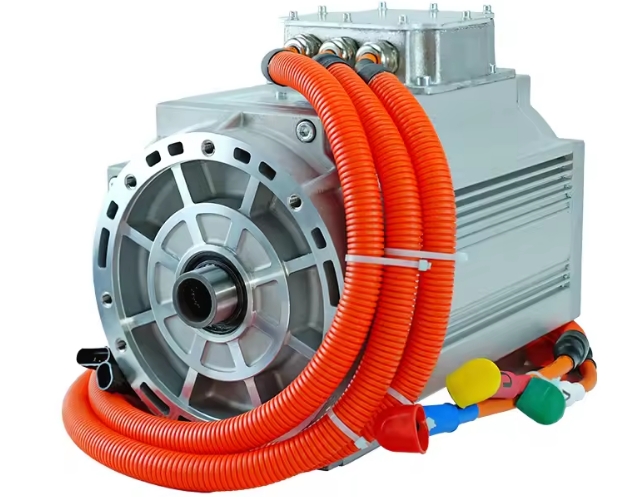
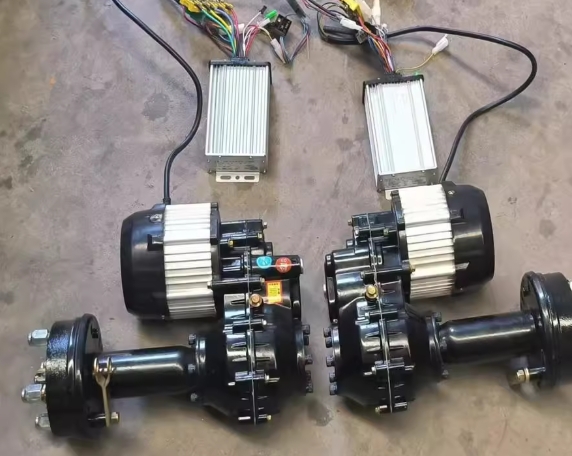


Installation and usage instructions for geared motors
I. Precautions before installing a geared motor
1
Precautions before installing a geared motor
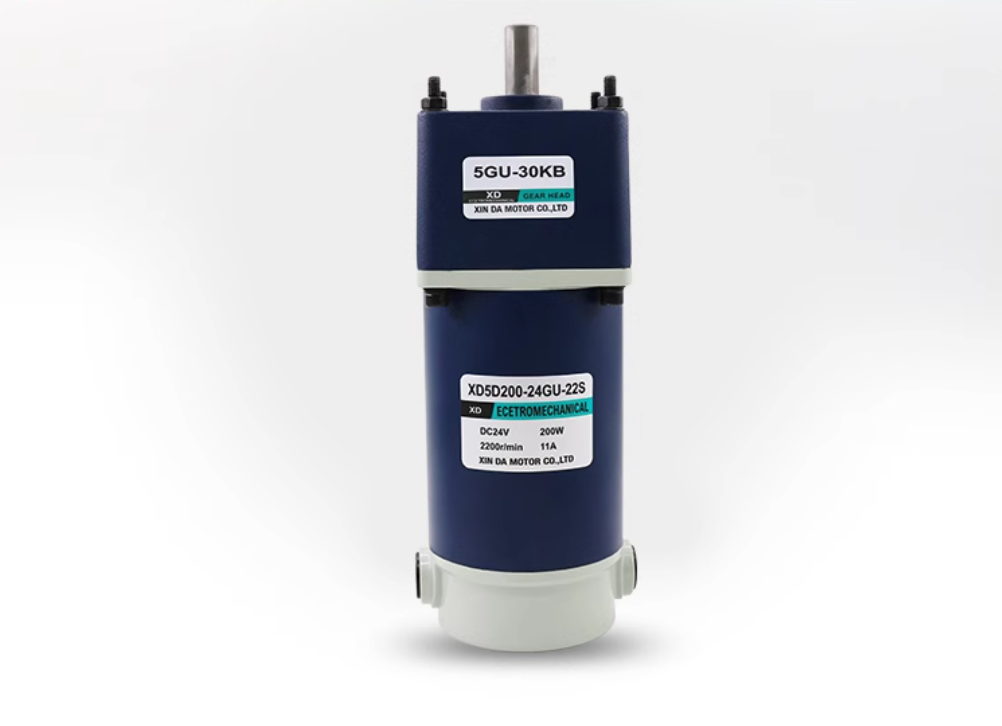
a. Before installation, check the nameplate on the geared motor to ensure the power supply is compatible.
b. Check the geared motor and reducer for damage.
c. The working environment should be free from oil, acids, alkalis, harmful gases, vapors, radioactive substances, etc.
2
When installing transmission components on the output shaft, hammering is prohibited. Instead, use assembly fixtures and the internal threads on the shaft end to press the transmission components in with bolts. Otherwise, damage to internal parts of the reducer may occur. Rigid fixed couplings should be avoided, as improper installation can cause unnecessary external loads, leading to premature bearing damage and, in severe cases, even output shaft breakage.
3
A large load that can be applied in reverse transmission to a worm gear reducer motor (self-locking) is not allowed .
4
Use solvent to thoroughly remove corrosion inhibitors, dirt, etc. from the surfaces of shaft extensions, flanges, and keys. When cleaning, be careful not to let the solvent get into the oil seal, otherwise the solvent may damage the oil seal.
5
The mounting base for the geared motor should be a reliable support structure with strength, rigidity, vibration damping, and torsion resistance, such as a base or frame. The base must be dry and free of grease.
6
For products with both a base and mounting flanges, care must be taken to prevent them from interfering with each other during installation.
7
The minimum performance grade for the basic spiral is 8.8.
8
Flexible couplings are recommended for use between the geared motor and the driven machine.
9
The radial load points on couplings, brakes, clutches, and gears mounted on the input and output shafts should be as close as possible to the shaft shoulders.
10
When connecting the keyed hollow output shaft to the machine shaft, anti-rust oil should be applied. When installing, it should be pushed in easily or pulled in with a screw. The end of the tensioning disc hollow output shaft with the tensioning disc should not be coated with any oil or grease, while the other end can be coated with anti-rust oil.
11
The input and output shafts of the geared motor, as well as the shafts of the prime mover and the driven machine, should be strictly aligned and coaxial. This requirement can reduce vibration and noise, extend the life of the bearings, and ensure the normal operation of the geared motor.
12
To prevent accidents, rotating parts should be fitted with protective covers or shields in accordance with safety requirements.
13
Ensure that the vent caps of each geared motor are correctly installed and that ventilation is unobstructed . The installation device should be designed to allow easy access for personnel to the oil level indicator, vent plug, and drain plug. After installation, thoroughly check the accuracy of the installation position and the reliability of all fasteners in sequence. The geared motor should rotate freely after installation. The geared motor uses oil bath splash lubrication; before operation, the user must remove the vent plug and replace it with a vent plug. Depending on the installation position, check the oil level by opening the oil level plug screw. Add oil until lubricating oil overflows from the oil level plug screw hole. After confirming the oil level plug is secure, perform a no-load test run for at least 2 hours. Operation should be smooth, without impact, vibration, abnormal noise, or oil leakage. Any abnormalities should be addressed promptly.
14
When torque is required, installation should be performed in a state of mutual freedom.
15
The installation and locking must be secure and reliable, and must not cause displacement during operation.
16
Grounding devices must be installed to prevent electric shock accidents.
II. Key Points for Daily Maintenance of Gear Reducer Motors
1
Gear motors should be cleaned regularly to remove oil and dust, and kept clean to facilitate heat dissipation.
2
Damaged oil seals should be replaced promptly.
3
The oil level should be checked frequently, and replenished immediately if the oil level is insufficient.
4
Lubricating oil should be changed regularly: When using a new machine for the first time, the lubricating oil must be changed after 7 to 15 days of operation. Thereafter, depending on the machine's usage, the oil can be changed every 3 to 6 months. It is important to note that the power must be disconnected when changing the oil to ensure safety . If the lubricating oil appears noticeably cloudy during inspection, it is recommended to change it as soon as possible.
5
Different qualities of lubricating oil should not be mixed.
6
The use and maintenance of electric motors should be carried out in accordance with the instruction manual.
7
During operation, if the oil temperature rises above 80℃ or the oil sump temperature exceeds 100℃, or if abnormal noise is generated, the operation should be stopped, the cause should be checked, the fault must be eliminated, and the lubricating oil should be replaced before the operation can continue.
8
Users should have reasonable rules and regulations for use and maintenance, and should carefully record the operation of the geared motor and the problems found during inspection. The above regulations should be strictly followed.
 XINDA
XINDA