





Application of constant torque operation control of motor in belt conveyors
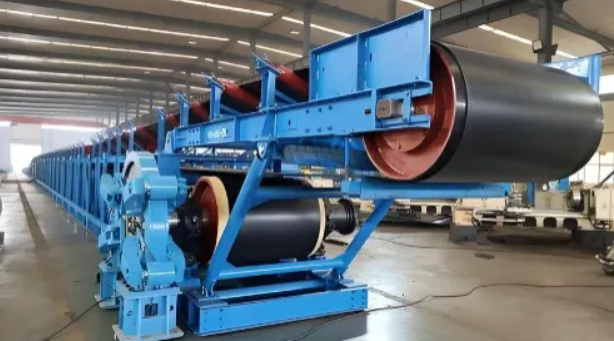
As a core conveying equipment in industries such as mining, chemical, and warehousing, belt conveyors need to operate stably under low-speed, heavy-load conditions for extended periods. They must cope with load fluctuations such as material accumulation and start-stop impacts, while ensuring uniform conveying speed to prevent material spillage or equipment damage. The core of its drive motor control is constant torque operation, achieving the dual requirements of low-speed, high-torque output and operational stability through precise control.
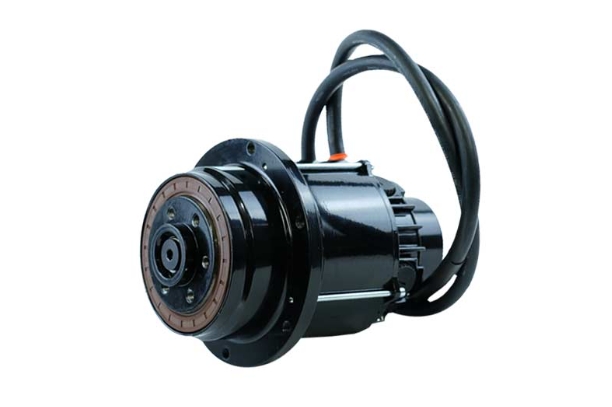
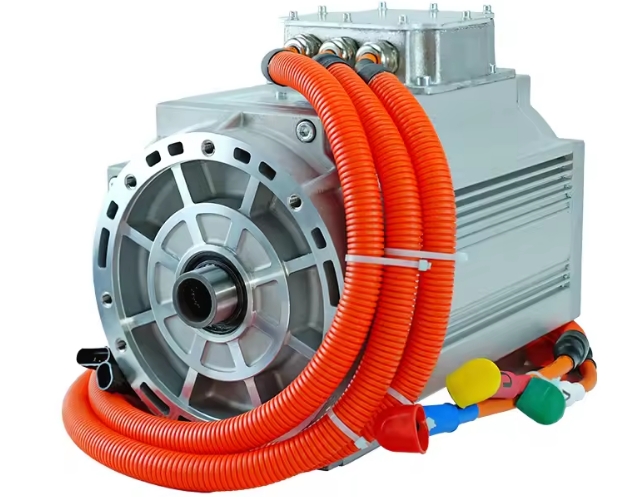
In this case, the belt conveyor is driven by an asynchronous motor. Under rated load, it needs to maintain a constant torque to drive the belt. During the start-up phase, it needs to overcome the static friction of the belt and the gravity of the material, requiring high response speed and accuracy of constant torque control. The control system is based on U/f proportional control, combined with vector control to optimize low-speed performance. It ensures synchronous adjustment of voltage and frequency below the base speed and a constant U/f ratio. At the same time, the stator voltage drop compensation function offsets the influence of motor internal resistance voltage drop on torque in the low-speed range, avoiding insufficient torque during startup that could cause belt jamming.
Closed-loop current control is a key element in ensuring stable constant torque. The system uses high-precision current sensors to collect the stator three-phase current in real time, transforms it into dq coordinate components, and locks the q-axis current at the torque setpoint to ensure rapid torque response without fluctuations when the load changes. At the same time, a preset current protection threshold is set so that when a sudden accumulation of material causes overload, the current output is limited in time to prevent motor burnout. Once the load recovers, the system automatically returns to constant torque operation.
To address complex on-site operating conditions, the system enhances its disturbance compensation and adaptability capabilities. It monitors belt speed, material weight, and motor temperature parameters in real time. When sudden changes in material quantity cause load fluctuations, it dynamically adjusts the voltage and current ratio to quickly compensate for the impact of disturbances on torque. For motor parameter drift caused by prolonged operation, a dynamic calibration algorithm corrects stator resistance and inductance deviations, preventing torque drift. During startup, a graded voltage boost soft-start strategy is employed to gradually increase torque output, reducing the damage of inrush current to the belt and motor, achieving smooth start-up and shutdown and continuous constant torque operation under heavy load conditions.
 XINDA
XINDA