![]()
Adjusting the speed of a DC motor by changing the armature voltage is a common speed regulation method. The basic principle is that the ideal no-load speed n0 of the motor is directly proportional to the armature voltage U. When the load is constant, the speed drop Δn remains essentially unchanged. Therefore, changing the armature voltage changes the motor speed. Specifically, when the armature voltage U increases, the motor speed increases; when the armature voltage U decreases, the motor speed decreases. This speed regulation method has a wide speed range, good linearity, and high stability, and is widely used in electric drives, automatic control systems, and other fields. However, in practical applications, it is important to ensure that the armature voltage adjustment is within the rated voltage range to avoid damaging the motor. Furthermore, to achieve stepless smooth speed regulation, the motor needs to be monitored and controlled during the speed regulation process to ensure stable operation. During DC motor speed regulation, a series of monitoring and control measures are required to ensure stable operation.
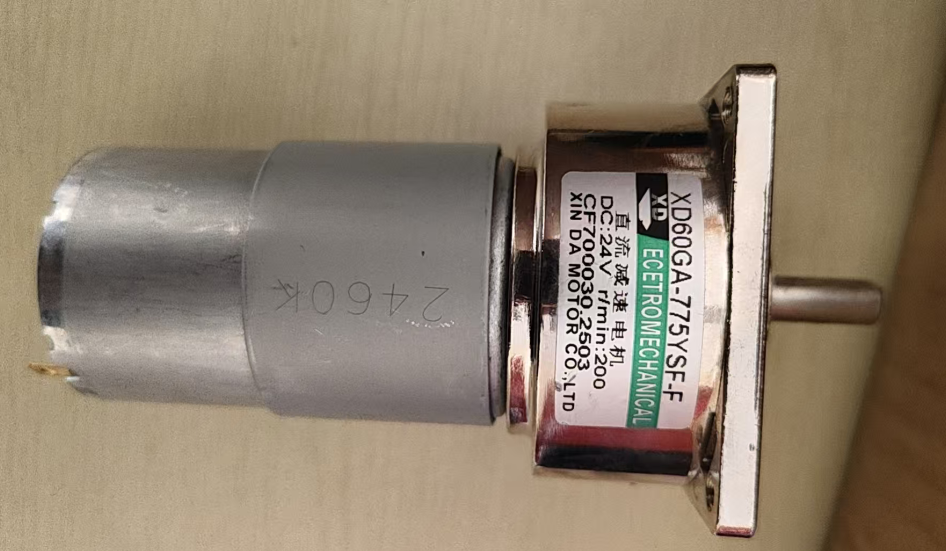
First, the input voltage and current of the motor need to be monitored to ensure they are within safe ranges. If the voltage or current is found to be too high or too low, timely adjustments are necessary to prevent motor damage. Secondly, the motor speed and load conditions need to be monitored. Based on changes in speed and load, the armature voltage or armature resistance should be adjusted promptly to ensure stable motor operation.
Furthermore, to achieve stepless smooth speed regulation, a closed-loop control method can be used. This involves comparing the actual motor speed with the set speed to generate a feedback signal, and then adjusting the armature voltage or armature resistance based on this signal to match the set speed. Finally, to improve motor efficiency and lifespan, regular maintenance and upkeep are required. This includes cleaning dust and debris from inside the motor, checking the insulation, and replacing worn bearings.
In summary, to ensure stable operation of a DC motor during speed regulation, multifaceted monitoring and control measures are necessary. In practical applications, appropriate speed regulation methods and control strategies should be selected based on specific circumstances to ensure the safe, stable, and efficient operation of the motor.






 XINDA
XINDA